





Bukidnon capitol building gets historical marker


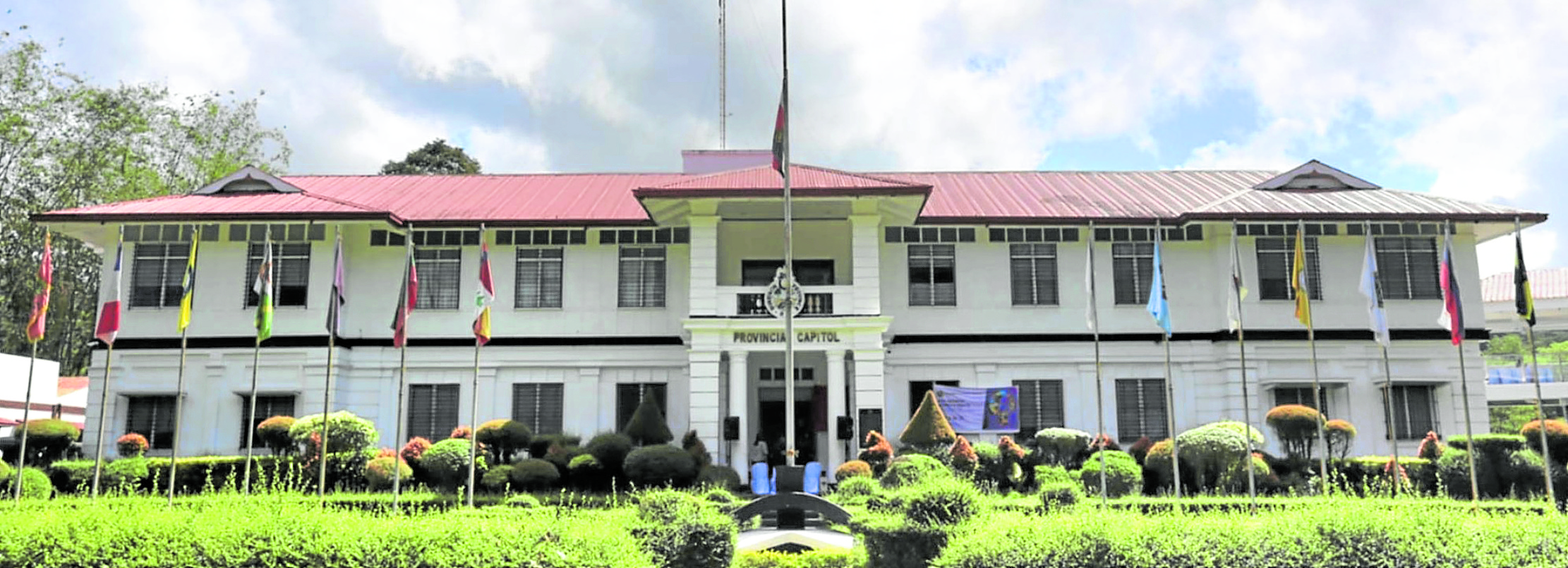
Bukidnon Capitol building —PHOTOS COURTESY OF THE NATIONAL HISTORICAL COMMISSION OF THE PHILIPPINES
Established in 1917, the province of Bukidnon recently received its third historical marker from the National Historical Commission of the Philippines (NHCP), this time for its capitol building in Malaybalay City.
Described by the NHCP as “one of the most exceptional capitol buildings in Mindanao that preserved its original neoclassical elements,” the building, built of concrete and wood, was designed by the famed Juan Arellano of what was then the Bureau of Public Works.
It was inaugurated in 1933 by then-governor of Bukidnon Antonio Rubin and was restored after World War II through the Philippine Rehabilitation Act of 1946.
This is the province’s second nationally recognized historical site following the installation of the marker for Camp Kasisang also in Malaybalay in 1948 and an updated marker for the same site last year.
The camp was where Brigadier General (later President) Manuel Roxas, American forces head in Mindanao Gen. William Sharp, and about 6,000 allied forces were imprisoned by the Japanese in 1942.
The marker is just one of the latest unveiled in Mindanao by the NHCP, which hopes to recognize more historic sites in the area.
To date, the agency has marked hundreds, if not thousands, of sites, structures, and personalities all over the country and abroad since its founding as the Philippine Historical Research and Markers Committee in 1933.
A clarification
On April 1, Lifestyle published my article on the lost pulpit panels of the San Miguel Arcangel Church in Argao, Cebu, mentioning that the panels, totaling to six, were lost many years ago and are yet to be found.
However, in a message to this writer on April 4, historian Jobers Bersales said the pulpit panels were indeed lost in the past, but have since been returned to the church.
“Here’s the final word I think: the pulpit panels were lost but recovered later,” he said, adding, “I guess the ones there now are the originals.” INQ


