





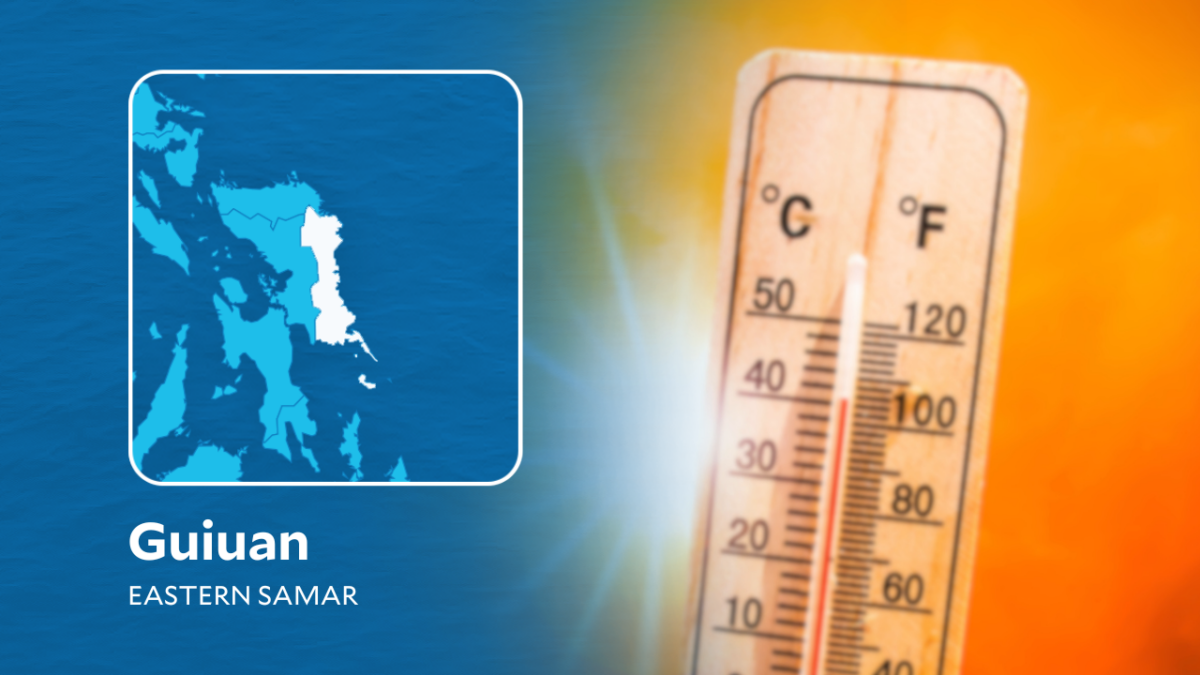
Heat index in Eastern Samar reaches 53 °C on Thursday


INQUIRER file photo
MANILA, Philippines — The heat index in Guiuan, Eastern Samar reached the “extreme danger” category anew on Thursday, the Philippine Atmospheric, Geophysical and Astronomical Services Administration (Pagasa) said.
Based on the state weather bureau’s data as of 5 p.m., the heat index in Guiuan reached a sizzling 53 °C.
READ: Typhoon Aghon leaves over P21 million damage to agriculture – NDRRMC
Last May 26 and 27, the heat index in the area peaked at 55 and 54 °C.
Meanwhile, the following areas also logged heat indices ranging from 42 to 48 °C on the same day:
48 °C
Roxas City, Capiz
47 °C
Catarman, Northern Samar
46 °C
Aparri, Cagayan Masbate City, Masbate
45 °C
Laoag City, Ilocos Norte Baler, Aurora Sangley Point, Cavite Infanta, Quezon Alabat, Quezon Mambusao, Capiz Iloilo City, Iloilo Catbalogan, Samar
44 °C
NAIA, Pasay City Dagupan City, Pangasinan MMSU in Batac, Ilocos Norte Tuguegarao City, Cagayan ISU in Echague, Isabela Iba, Zambales Casiguran, Aurora Ambulong in Tanauan, Batangas San Jose, Occidental Mindoro Cuyo, Palawan Daet, Camarines Norte Dumangas, Iloilo Maasin, Southern Leyte Butuan City, Agusan del Norte
43 °C
Bacnotan, La Union Tayabas City, Quezon Legazpi City, Albay Virac, Catanduanes CBSUA in Pili, Camarines Sur Tacloban City, Leyte Zamboanga City
42 °C
Science Garden, Quezon City Sinait, Ilocos Sur Calayan, Cagayan CLSU in Muñoz, Nueva Ecija Cubi Point in Subic Bay, Olongapo City Calapan, Oriental Mindoro Puerto Princesa City, Palawan Aborlan, Palawan Juban, Sorsogon Siquijor, Siqiujor VSU in Baybay, Leyte Dipolog, Zamboanga del Norte
READ: Pagasa declares official start of rainy season
According to Pagasa, heat index is “a measure of the contribution that high humidity makes with abnormally high temperatures in reducing the body’s ability to cool itself.”
Heat indices ranging from 42 to 51 degrees Celsius fall under the “danger” category, and people exposed to these heat indices are prone to heat cramps, exhaustion and even heat stroke with drawn-out exposure.
To prevent the effects of the roasting weather, the state weather bureau said the public must limit time spent outdoors; drink plenty of water; avoid tea, coffee, soda and liquor; use umbrellas, wear hats, and wear sleeved clothing outdoors; and schedule heavy-duty activities on the cooler periods of the day.
It also noted that symptoms of heat-related illnesses include heavy sweating, exhaustion or fatigue, dizziness or lightheadedness, blacking out or feeling dizzy when standing, a weak but fast pulse, nausea, and vomiting.
In cases of emergency, Pagasa advised the public to do the following:
Move the person to a shady spot and lie him or her down with legs elevated.
If conscious, have the person sip cool water.
Remove clothing.
Apply cool water to the skin and provide ventilation.
Apply ice packs to the armpits, wrists, ankles and groin.
If the condition of the person worsens, bring him or her to a hospital immediately.


