


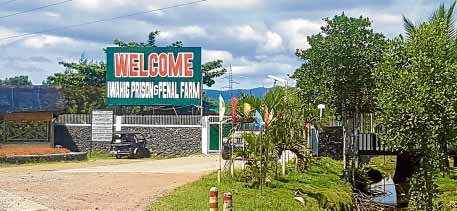
The 26,230-hectare Iwahig Prison and Penal Farm, established in 1904 in Puerto Princesa City, Palawan.
MANILA, Philippines – The pilot technology demonstration farm of inmates at the Iwahig Prison and Penal Farm (IPPF) in Palawan will be ready for harvest next month, the Department of Agriculture (DA) said. The 4.5-hectare demonstration farm in Iwahig is anticipated to produce 96.8 metric tons of rice, watermelon, melon, eggplant, tomatoes, red chili pepper, pole sitao, cucumber, okra, squash, patola, ampalaya, and sweet corn in December, an estimated gross income of P7.3 million.
“Proceeds from the farm will be used by the Bureau of Corrections (BuCor) to expand its agricultural development activities by using idle lands to support [the] government’s food security campaign”, the the DA said on Monday.
The demonstration farm is part of the DA and Department of Justice (DOJ) Reformation Initiative for Sustainable Environment for Food Security or DAxDOJ RISE Project.
At least 70 inmates in IPPF were trained to produce high-value crops and rice, the DA added.
RISE’s Phase 1 is being implemented with partners from the private sector, which supports the inmates’ inclusion in the value chain as part of rehabilitative justice programs.
The project’s Phase 2, on the other hand, has already started with the training of 50 inmates in cashew production, covering at least 500 hectares of land.
The DA Banner Programs have pledged support for the development of 25 hectares of land for corn production, 200 hectares for pasture, 200 hectares for cattle and goat raising, 40 hectares for rice cultivation, one hectare for agri-tourism, and 0.5 hectares for tilapia production, the DA said.
“The Project is expected to help address various issues and meet key sustainable development goals like social inclusion, climate change adaptation and poverty alleviation,” it added.