

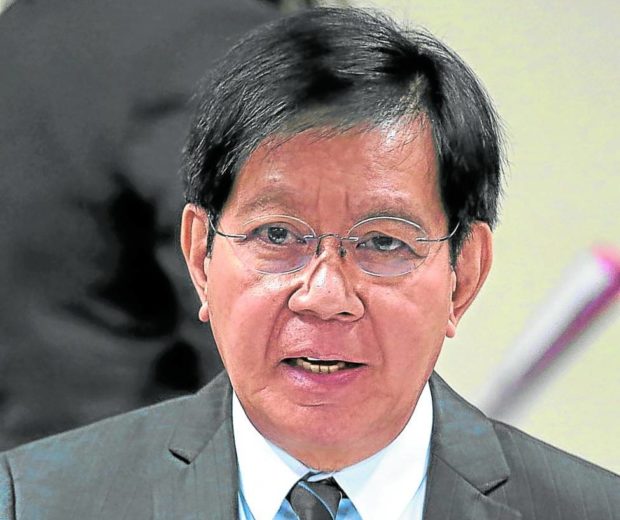
Senator Panfilo Lacson. FILE PHOTO
MANILA, Philippines — Presidential aspirant Senator Panfilo Lacson will push for the regularization of public service drivers and conductors as he recalled how his father worked as a jeepney driver to earn a living for his family.
“‘Yan ang bumuhay sa amin [at] nagpaaral sa aming magkakapatid [That’s the job that provided for us and helped send me and my siblings through school],” Lacson said in an interview on radio DZXL over the weekend.
Lacson stressed that regularizing public transport workers would ensure that they have regular salaries, provide more opportunities to their families and protect the commuting public in case of accidents.
“Kasi ‘pag na-regularize, madaling ma-identify. Kasi again pagka-contractual, ‘di ba, nauso noong araw 10 ang lisensya ng driver? ‘Pag nahuli o kaya naaksidente tinatapon na lang ‘yung ano at mayroon na naman siyang [ibang] lisensya na gagamitin,” the senator said.
(Because if they are regularized, they are easier to identify. Because again, if they are contractual, wasn’t in the practice back in the day that drivers had 10 licenses? So that if they got caught or have an accident, they can just throw away one and they would still have other licenses to use.)
He also said regularizing drivers and conductors would raise their dignity.
“Kasi diyan ma-pro-professionalize [‘yung] mga driver [at] konduktor tapos medyo maganda ‘yung tingin nila, ‘yung dignidad nila aangat, kasi regular employees na sila. Hindi na sila ‘yung parang, alam mo ‘yon, boundary system,” he added.
(Regularization will professionalize the drivers and conductors, so they will see themselves in a better light, and improve their dignity because they become regular employees. They won’t rely on the ‘boundary system.’)
Lacson, meanwhile, underscored the need for lawmakers to be “filled with data” in crafting legislation the practice of regularizing workers among public transport companies in order to determine the “positive and negative effects” for the industry.
Most jeepney drivers and bus conductors have their income tied to a “boundary” that the vehicle owner or operator sets for a certain day or period, Lacson noted.
The “boundary” income is what goes to the owner or operator and anything in excess of that then goes to the driver or conductor, the amount of which varies given traffic conditions, the volume of passengers, and government regulations, among other factors.
Lacson, meanwhile, said transport workers will have more discipline and could easily be punished if they violate any laws if the public transportation system is fixed.
“Pero kailangan lang talaga nasa wastong pag-aaral at saka alamin kung ilan ‘yung maaapektuhan at ilan ‘yung makikinabang (But we really need to study the situation carefully and learn how many transport workers will be affected and how many will benefit from it),” he pointed out.